Showing posts with label Himachal Pradesh. Show all posts

Thursday, July 02, 2026

India's Anger Crisis: Why Tempers Are Exploding


A tourist from Haryana is arrested after allegedly assaulting a local couple following a road rage confrontation on Mussoorie's Mall Road. Days earlier, a 17-year-old in Ghaziabad is allegedly abducted and beaten to death after his motorcycle brushes against a car. In Gurugram, a minor dispute over giving way on the Delhi-Gurugram Expressway leaves a motorist with grievous head injuries after he is attacked with iron rods. 

Across Uttarakhand, authorities were compelled to launch a special campaign against road rage and public disorder after a series of violent incidents involving tourists. Similar scenes have unfolded in Himachal Pradesh’s Manali, where viral videos of late-night brawls on the iconic Mall Road and clashes between tourists have reinforced concerns that destinations once associated with leisure are increasingly becoming flashpoints for aggression and lawlessness.


Individually, these incidents appear unrelated. Collectively, they point to something more unsettling. Across India, minor disagreements are increasingly ending in violence, ordinary frustrations are turning deadly and public spaces — from highways and markets to holiday destinations — are becoming theatres of confrontation. The question is no longer whether tempers are fraying. It is why India seems to be losing its patience.

Road rage has become the most visible expression of this simmering anger. What begins as a missed turn, an unnecessary horn or a scratched bumper can quickly escalate into assault or even murder. Police forces in several cities have acknowledged a rise in such incidents, prompting targeted enforcement drives and closer monitoring of habitual offenders.

The phenomenon extends far beyond the roads. Tourist destinations once associated with relaxation are witnessing ugly confrontations. In hill states, locals have repeatedly complained of drunken behaviour, reckless driving, vandalism and intimidation by visitors.

Social media has amplified the problem. Every confrontation now has an audience. Smartphones appear before tempers cool. Viral fame has become an incentive rather than a deterrent, with public aggression often performed as much for the camera as against the victim. Algorithms reward outrage, while online abuse has normalised a language of contempt that increasingly spills into everyday life.

The deeper causes are harder to measure but impossible to ignore. India's cities are louder, hotter and more crowded than ever. Long commutes, relentless traffic, financial pressures, rising aspirations and shrinking personal space leave millions living under constant stress. Mental health professionals have repeatedly linked urban fatigue and accumulated frustration to impulsive acts of violence when seemingly minor triggers appear.

There is also an erosion of social restraint. The fear of public shame has weakened, while the certainty of swift punishment often appears absent. Too many people now behave as though force is the quickest route to resolving disagreement. Ego frequently triumphs over empathy. Winning an argument matters more than preserving dignity — one's own or another's.

Politics and public discourse have hardly helped. Television debates reward confrontation. Social media thrives on polarisation. Public figures increasingly communicate through accusation rather than persuasion. Citizens inevitably absorb the tone set by institutions. When outrage becomes the dominant language of public life, it gradually becomes the language of private life as well.

India is not an angry nation by nature. It remains a society where strangers still help accident victims, communities unite during disasters and kindness survives in countless unseen acts every day. Yet these stories rarely trend.

The greater danger lies in accepting everyday aggression as normal. When abuse becomes routine, violence ceases to shock. A society does not become hostile overnight. It does so one argument, one assault and one moment of unchecked rage at a time.

Friday, January 30, 2026

Reels, monkey antics and rubbish: When civic sense takes a Himalayan tumble


Somewhere between the plains and the first hairpin bend into Himachal Pradesh or Uttarakhand, something curious happens to the average tourist. Civic sense quietly disembarks. It simply disappears. 


What follows every long weekend is now painfully familiar. Tourists from the plains storm the hills like they’ve won a lifetime supply of irresponsibility vouchers, transforming snow-capped serenity into a giant, litter-strewn tailgate party. 


Having pored over the endless circus in news clips and social media feeds — those viral jams, trash avalanches and tone-deaf shirtless antics — one cannot help but chuckle bitterly at the annual ritual: plenty of selfies, zero self-awareness.


Behold the majestic 13-km Manali-Patlikuhal jam, where Delhi-NCR and neighbouring states day-trippers ditch their low-slung sedans and porter luggage like reluctant sherpas, auditioning for Survivor: Himachal Edition. 


Shimla-Manali reels under 8,000-10,000 vehicles daily, trapping even the culprits for 24-hour marathons in their own chaos — three lakh invaders projected, because why plan when you can honk? Cops play human Tetris to free the mess, while locals ponder if Everest was this exhausting.


Nullahs bloated with plastics, Tirthan Valley’s pristine brooks auditioning as Delhi’s next landfill. Apparently, 70% NCR tourists mistook ‘leave no trace’ for ‘leave your trash’. Viral Sissu clips capture sunroof revellers boozing through a 40-day tourism ban, as if ‘customs’ meant ‘costumes for clowns’. 


Mussoorie, the so-called Queen of Hills, chokes on wrappers while polite foreigners play cleanup crew - talk about role reversal with a side of rubbish.


Sari-stripping in Manali? Pistol-waving at Parwanoo-Shimla tolls? These gems have ministers begging for ‘civilised conduct’ on sacred Dev bhoomi, as if hill etiquette came with a spoiler alert. Shimla’s Mall Road? Locals’ no-fly zone amid selfie zombies and VIP tantrums, nothing screams ‘holiday’ like treating apple carts as photo props.


Uttarakhand's 2023 pledge to assess limits in 15 towns - from Mussoorie to Pithoragarh - gathers dust, ignoring NGT pleas for tourist registration tied to parking and rooms. Himachal splurges Rs 3,000 crore on tunnels and tamashas, blind to sewage tsunamis and landslide encores post-Joshimath. 


Activists like Anoop Nautiyal scream into the void: revenue’s golden egg hatches scarcity, smog and sobbing locals. Who needs limits when selfies are infinite?


At the heart of this seasonal circus is entitlement. A belief that paying for a hotel room includes the right to block roads, ignore rules and treat fragile ecosystems as disposable backdrops. Authorities respond with fines, caps and barricades, but enforcement has limits. Civic sense, unfortunately, cannot be outsourced to the traffic police.


So, what’s the solution to this recurring theatre of the absurd? Perhaps it is time for a radical idea: treat hill towns like places where people actually live. Drive less, walk more. Carry your rubbish. Lower the volume. 


Cap homestays, ape Sikkim’s plastic purge, slap ‘civic deposits’ refunded minus your landfill donation. Ban sunroof DJs, snow-illiterate cars and blast PSAs: ‘Hills ain’t your highway, hotshot’. 


The mountains have been patient hosts. The question is whether tourists can learn to be guests rather than invaders. Until then, civic deficient nomads will keep re-enacting Mumbai rush hour at 10,000 feet, one flung bottle at a time. 

Friday, January 14, 2022

When You Are Old

"When you are old and grey and full of sleep,
And nodding by the fire, take down this book,
           And slowly read, and dream of the soft look
         Your eyes had once, and of their shadows deep" - WB Yeats
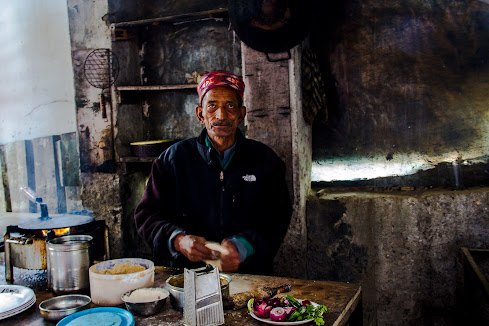
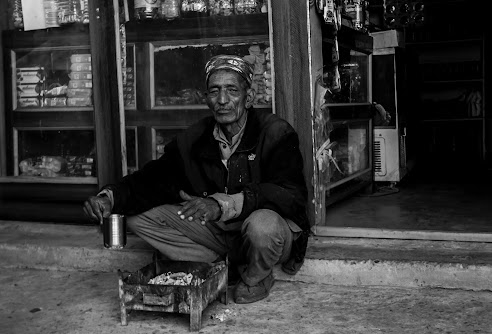
Himachali old man in Manali